 Trekking CougarsChoosing & Chasing Mountains
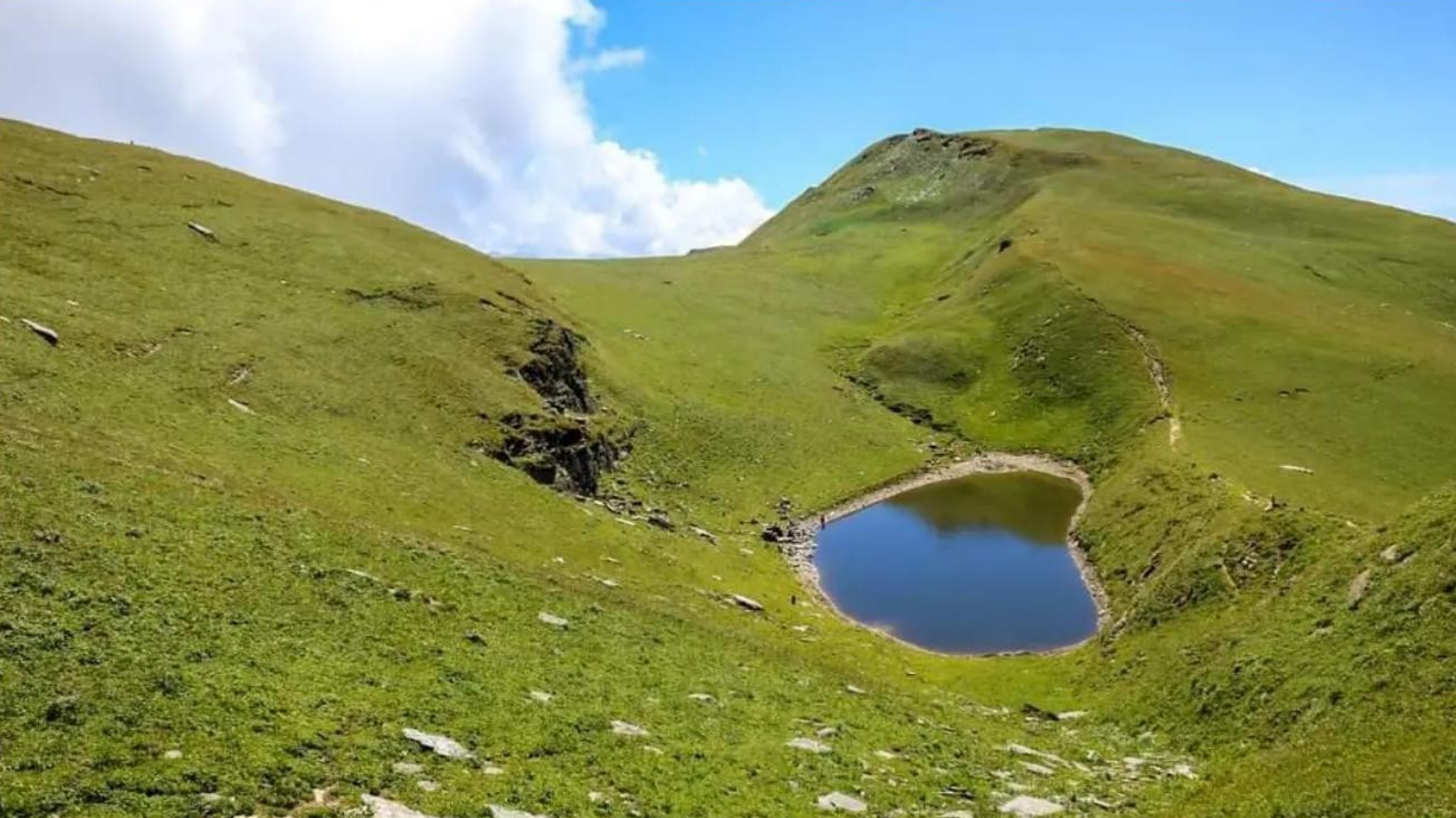
The first time I stood at Khanpari Tibba and looked down at Rani Sui, I honestly stopped talking mid-sentence. I’ve guided groups through the Dhauladhar and Pir Panjal for years, and there are maybe three lakes in this whole belt that make people go quiet like that. This one is shaped like an actual heart when you see it from above — not a marketing exaggeration, ask anyone who’s stood on that ridge in October when the water is glass-still.
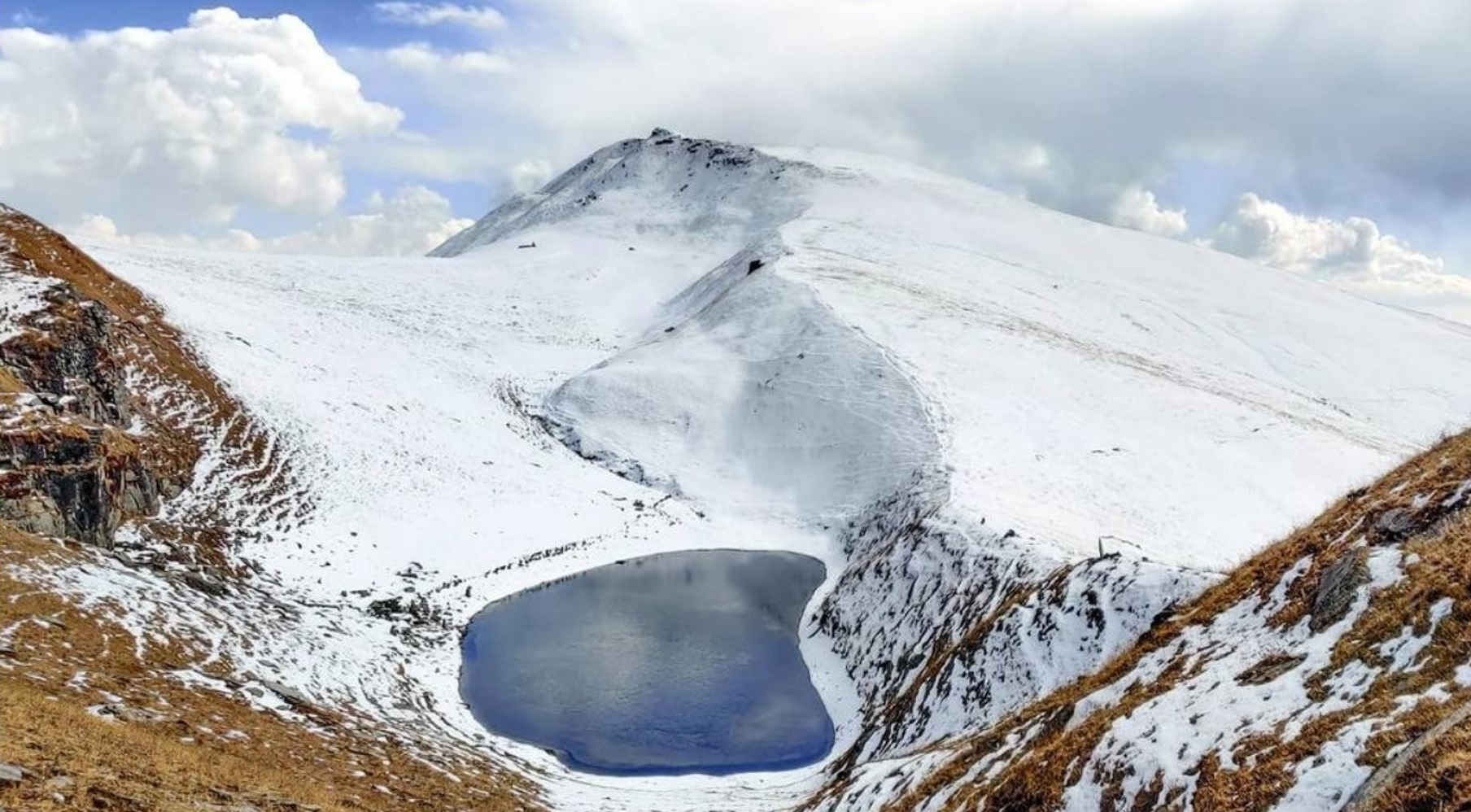
Rani Sui Lake sits at 11,154 ft in the Kullu Valley, tucked between the Bara Bhangal and Kalihani Pass route, on a trail the local Gaddi shepherds have walked for generations long before anyone called it a “trek.” It’s one of the few high-altitude lakes near Manali that still doesn’t see daily crowds — which, if you’ve done Hampta Pass in peak season and spent half your walk stepping around other groups, will feel like a different planet entirely.
Rani Sui Lake Trek: At a Glance
| Duration | 3 Days / 2 Nights |
| Trek Distance | 18–22 km (round trip) |
| Max Altitude | Rani Sui Lake: 11,154 ft (3,400 m) · Khanpari Tibba ridge: 13,205 ft (4,025 m) |
| Difficulty | Easy–Moderate |
| Base Camp | Manali (starts at Hadimba Temple / Dungri) |
| Best Season | Mid-May to June · September to Mid-October |
| Nearest Airport | Bhuntar (Kullu-Manali Airport), ~52 km from Manali |
| Nearest Railhead | Joginder Nagar (narrow gauge) or Chandigarh (broad gauge, ~310 km) |
Why Rani Sui Is Different From the Usual Manali Treks
- It’s still a shepherd’s trail, not a tourist highway. Unlike Hampta Pass or Beas Kund, you won’t be sharing the ridge with fifteen other groups on the same August weekend.
- The lake is genuinely heart-shaped — visible clearly from the Khanpari Tibba ridge above it, which most operators don’t even mention pushing to.
- Short enough for a long weekend — 3 days is realistic for most working professionals, without needing to burn a full week of leave.
- Two mountain ranges in one frame. From the Rani Sui–Khanpari ridge you get the Pir Panjal on one side and the Dhauladhar on the other, plus Deo Tibba, Indrasan, and the Bara Shigri Glacier along the approach.
- Genuinely moderate, not falsely marketed as “easy.” The Lamadugh-to-Rani Sui stretch has a real, honest climb. We won’t tell you otherwise just to sell more seats.
Best Time for the Rani Sui Lake Trek
| Mid-May – June | July – August |
| Snow patches still linger near the ridge, meadows are turning green, wildflowers just starting. Cooler days, colder nights. | Avoid if possible. Monsoon hits this belt hard — slippery trail, leech activity in the lower forest, and visibility at the ridge drops to near zero on bad days. |
| September – Mid-October | November onward |
| Our top recommendation. Post-monsoon clarity, the lake is at its stillest, autumn colours in the forest, and the crowd is thinnest. | Snow starts closing the ridge. Not recommended without a winter-specific guide and gear — the lake itself freezes solid by December. |
Manjeet’s honest take: “If you can only pick one window, September 20 to October 10 is the one. I’ve done this trail in June and in September — September wins every time for how still that lake gets.”
How to Reach Manali (Base Camp)
From Chandigarh: ~310 km, 8–9 hours by road via Bilaspur-Mandi-Kullu. Overnight Volvo buses run daily from Chandigarh ISBT.
From Delhi: ~540 km, 12–14 hours by road. Overnight HRTC or Volvo buses from Kashmiri Gate ISBT are the most common option; flying into Bhuntar and taking a 1.5-hour cab is faster if your dates are tight.
From Bengaluru / other southern cities: Fly into Chandigarh or Delhi, then follow the road route above. Direct flights to Bhuntar from the south are rare and seasonal — check availability before booking, don’t assume.
Altitude Profile
6,398 ft
10,000 ft
11,154 ft
13,205 ft
9,200 ft
Day-Wise Itinerary
Day 1: Manali (6,398 ft) to Lamadugh (10,000 ft) — 6 km, 4–5 hours
We start at Hadimba Temple (Dungri) — fill every bottle here, because this is your last reliable water source until camp. The climb is steep and narrow through thick deodar forest almost the entire way, so don’t let the short distance fool you into starting late or under-hydrated. Around the halfway point the forest opens into rocky ledges with your first real view back over Manali town and the Beas valley. Lamadugh itself is a wide alpine meadow ringed by maple, spruce, and oak — genuinely one of the prettiest first-night campsites in this region, and shepherds still graze cattle here through summer.
Manjeet’s tip: This day looks short on paper. It isn’t easy — the gradient is relentless for the first two hours. Pace yourself, don’t sprint the switchbacks.

Day 2: Lamadugh to Rani Sui Lake via Khanpari Tibba, then down to Duddu Thatch (11 km, 8–9 hours)
The big day. From Lamadugh the trail turns into a steep ridge climb below Khanpari Tibba, and this stretch has short patches of scree and, early in the season, leftover snow. Take it slow here — it’s the one section of this trek that genuinely deserves respect. From the ridge near Khanpari Tibba you get a full 360-degree view: the Pir Panjal on one side, the Dhauladhar on the other, and Manali sitting small in the valley below. Rani Sui Lake itself appears almost suddenly below the ridge — a small, still, heart-shaped tarn that photos genuinely undersell. After time at the lake, we descend through maple, pine, walnut, and horse chestnut forest to Duddu Thatch for the night.
Manjeet’s tip: Don’t rush past the lake to save daylight. This is the entire point of the trek — sit for twenty minutes before we move on.

Day 3: Duddu Thatch to Manali (12 km, 5–6 hours)
An easier descent day through forest and pastoral trail back to Manali. Good day to slow down, take photos you rushed on Day 2, and let your legs recover on the gentler gradient before the drive or bus back.
Difficulty & Fitness — The Honest Version
Official rating: Easy–Moderate. What that actually means: Day 1 and Day 2’s ridge climb are genuinely moderate — not beginner-easy. If this is your first-ever trek, it’s a manageable one, but come in with some base fitness. This is not a walk-in-off-the-street trek.
| Weeks Before Trek | Training Focus |
| 4 weeks out | 30-min brisk walk or jog, 4x/week; start bodyweight squats and lunges |
| 3 weeks out | Add stairs or incline walking, 45 min sessions; build to 5 km jog |
| 2 weeks out | One long walk (10–12 km) with a loaded daypack (5–6 kg) |
| 1 week out | Taper down, light walks only, focus on sleep and hydration |
- You have a diagnosed cardiac or respiratory condition without medical clearance
- You’ve had recent knee or ankle surgery without full rehab clearance
- You cannot currently walk 8–10 km comfortably on flat ground
Cost Breakdown
| Expense | Budget | Mid-Range |
| Trek package (camping, meals, guide, permits) | ₹8,499 | ₹9,999 |
| Manali stay (night before/after) | ₹600–800 | ₹1,500–2,000 |
| Transport to Manali (Chandigarh/Delhi Volvo) | ₹900–1,200 | ₹2,500 (flight to Bhuntar + cab) |
| Personal gear rental (if needed) | ₹500–800 | ₹800–1,200 |
| Estimated Total | ₹10,500–11,300 | ₹14,800–15,900 |
Permits
| Permit | Who Needs It | Arranged By |
| Forest entry / eco fee | All trekkers | Trekking Cougars, on arrival in Manali |
| ID proof | All trekkers (Indian nationals: Aadhaar; foreign nationals: passport) | Carry original + 2 photocopies |
Note: this route does not require an Inner Line Permit (unlike Kashmir or Spiti routes) or a GHNP core-zone permit. It’s the same category as Hampta Pass, Beas Kund, and Bhrigu Lake — a standard forest department entry permit, arranged directly by the operator and typically bundled into the trek cost rather than paid separately at a public counter. There’s no fixed published per-day rate the way GHNP treks have (₹100/₹400) — confirm the current bundled rate with your forest range office contact before publishing an exact figure.
Rani Sui vs. Hampta Pass: Which Should You Pick?
If you’re deciding between the two, the honest answer is: Hampta Pass for a bigger, more dramatic crossing with a valley-to-valley landscape change; Rani Sui for a shorter, quieter, more contemplative trek with one standout payoff view. Read our full Bhrigu Lake vs. Hampta Pass comparison for how Hampta stacks up against the region’s other short treks.
Common Mistakes First-Timers Make
- Underestimating Day 1. Trekkers assume 6 km means easy and start late without breakfast — consequence: arriving at Lamadugh exhausted and dehydrated. Fix: Start by 8 AM, eat a full breakfast, top up water at Hadimba Temple.
- Skipping acclimatization on Day 1 evening. Going straight to sleep after a hard climb without a short walk-around at camp. Consequence: higher AMS risk on Day 2’s bigger altitude gain. Fix: a slow 15-minute walk around Lamadugh meadow before dinner helps your body adjust.
- Wearing cotton layers. Trekkers pack cotton hoodies because Manali “isn’t that cold.” Consequence: cotton stays wet and cold once you sweat on the climb. Fix: synthetic or wool base layers only.
- Rushing past the lake on Day 2. Trying to save time for the descent to Duddu Thatch. Consequence: missing the entire reason for the trek. Fix: build in a fixed 20–30 minute halt at the lake in the itinerary, non-negotiable.
- Not booking gear rental in advance. Assuming Manali market will have everything on the day. Consequence: scrambling last-minute for trekking poles or gloves. Fix: confirm gear rental with us at least 3 days before your trek date.
Weather Contingency
| Condition | Our Response |
| Light rain / drizzle | Trek continues as planned with rain gear on |
| Heavy rain | Day 2 ridge section may be delayed or rerouted for safety; guide has final call |
| Sudden snowfall (shoulder season) | Trek may be paused at Lamadugh or shortened; full safety briefing given at base camp |
Emergency Contacts
Trekking Cougars WhatsApp / trek support: +91 81988 38368
Manali Police Control Room: 100
Nearest major hospital support: Kullu / Manali medical support details are confirmed during the pre-trek briefing
Frequently Asked Questions
Q: How difficult is the Rani Sui Lake trek for beginners?
A: The Rani Sui Lake trek is rated easy-to-moderate, and beginners with basic fitness can complete it, but the Day 2 ridge climb genuinely tests stamina — it isn’t a flat walk.
Q: What is the altitude of Rani Sui Lake?
A: Rani Sui Lake sits at 11,154 ft (3,400 m). The trek’s actual highest point, Khanpari Tibba ridge above the lake, reaches 13,205 ft (4,025 m).
Q: What is the best time to do the Rani Sui Lake trek?
A: Mid-May to June and September to mid-October are the best windows; we recommend late September for the clearest views and stillest lake.
Q: Is the Rani Sui Lake trek crowded?
A: No — unlike Hampta Pass or Beas Kund, Rani Sui remains one of the quieter treks near Manali, with far fewer groups on the trail.
Q: How many days does the Rani Sui Lake trek take?
A: The standard itinerary is 3 days and 2 nights, covering 18–22 km round trip from Manali.
Q: Do I need a permit for the Rani Sui Lake trek?
A: You’ll need a forest entry/eco fee (arranged by Trekking Cougars) and standard photo ID. No Inner Line Permit is required for this route.
Q: Is there mobile network on the Rani Sui Lake trek?
A: Network is unreliable past Lamadugh. Inform family in advance that you may be unreachable for 2 days.
There’s a specific kind of quiet at Rani Sui that you don’t get on the busier Manali trails anymore. If that’s what you’re looking for — not a crowd, not a checklist, just a heart-shaped lake and two mountain ranges watching over it — this is your trek.
Book the Rani Sui Lake Trek with Trekking Cougars — Choosing & Chasing Mountains since 2010.
Related treks: Bhrigu Lake Trek Guide · Bhrigu Lake vs. Hampta Pass
WhatsApp Trekking Cougars at +91 81988 38368 or visit trekkingcougars.com to book.