 Trekking CougarsChoosing & Chasing Mountains
By Javed — Trekking Cougars ✓ Verified Guide | Last verified on the trail: August 2025
Duration
Max Altitude
Distance
Best Season
Table of Contents
ToggleWhat is the Kashmir Great Lakes Trek?
I have led trekking groups in the Indian Himalayas for over eight years. I have stood on the summit of Stok Kangri at 6,153 metres. I have camped in -20°C on Chadar. But when people ask me which trek genuinely stopped me in my tracks — not once, but every single time — my answer is always the same.
Kashmir Great Lakes.
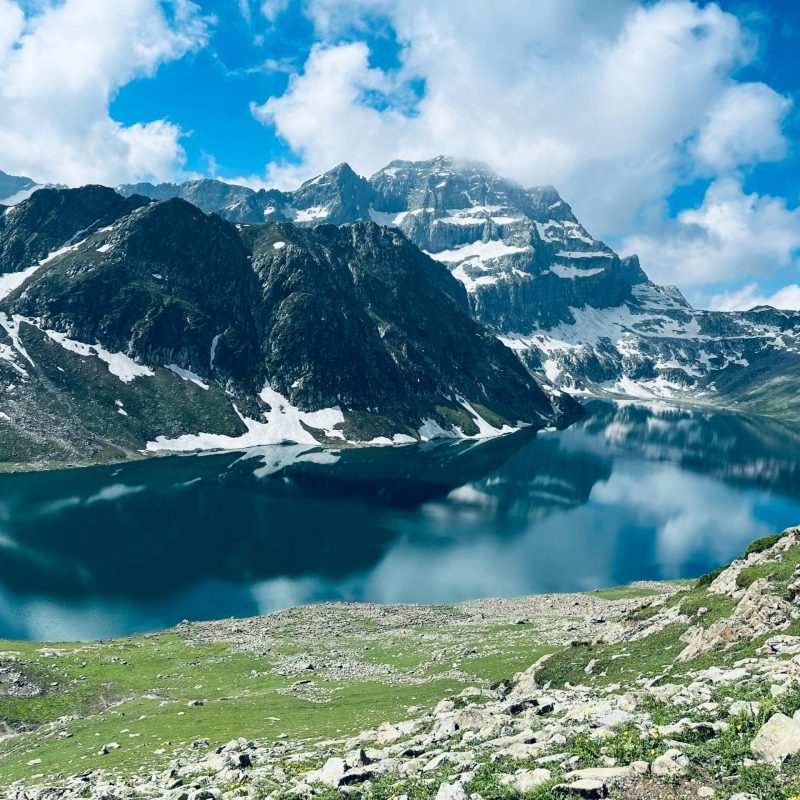
The Kashmir Great Lakes Trek (popularly called the KGL Trek) is a 70–75 km high-altitude trek through the Kashmir Himalayas, running from Sonamarg to Naranag across seven glacial alpine lakes, three high mountain passes and five river valleys — all in 7 to 8 days.
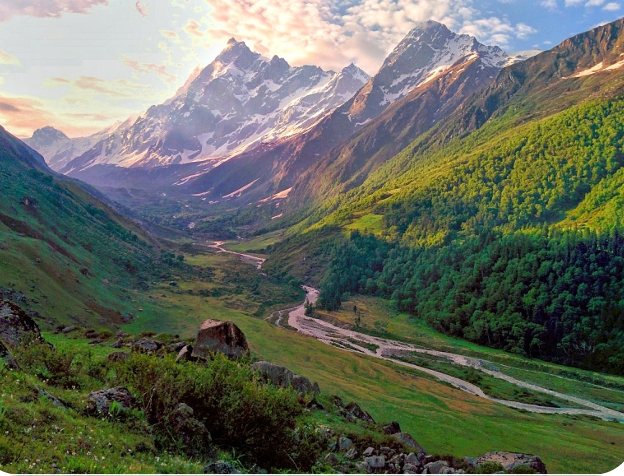
What makes it extraordinary is not any single moment. It is the relentlessness of the beauty. There is no “Day 6 when things get good.” From the first morning you step off the road at Shitkadi, the Himalayas start performing — and they do not stop until you walk into Naranag village eight days later with tired legs and a full heart.
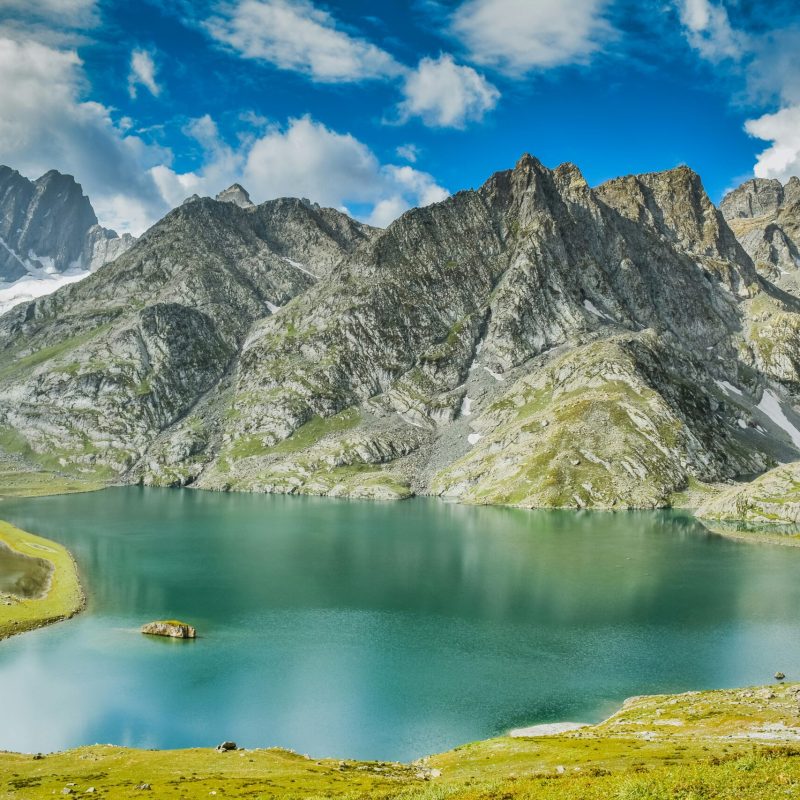
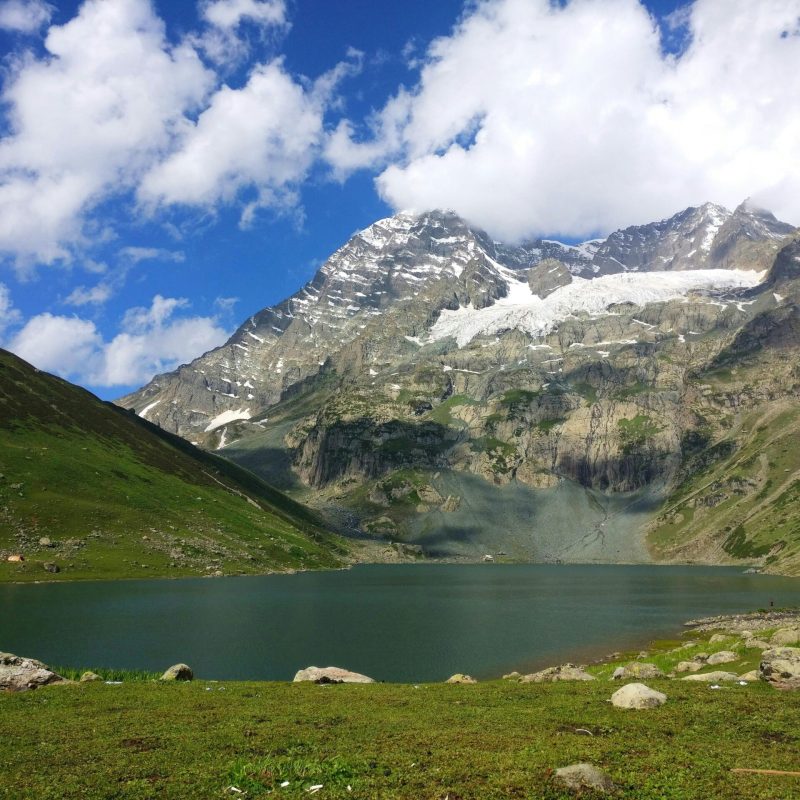
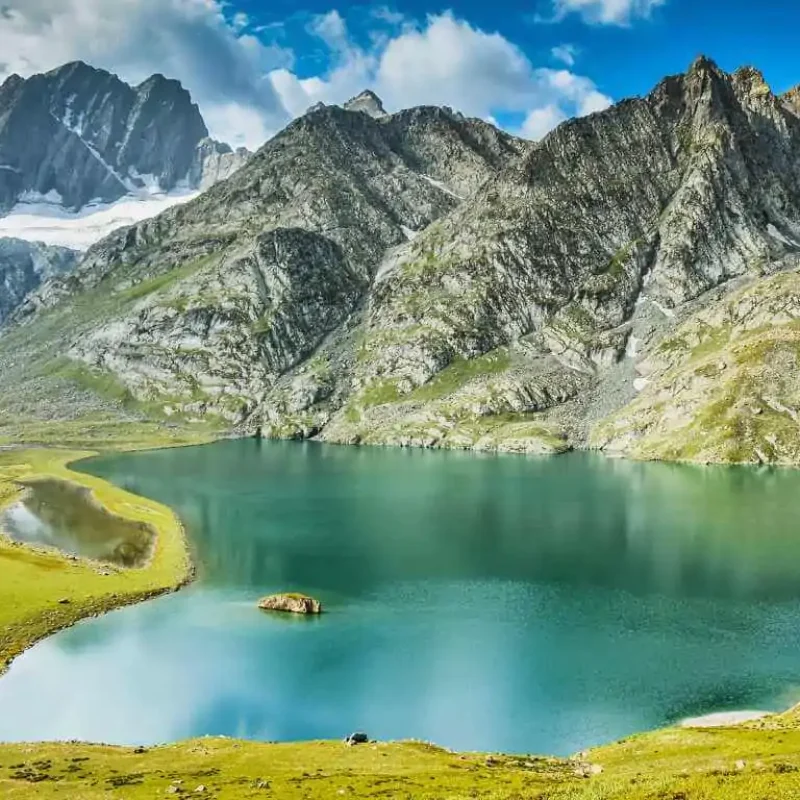
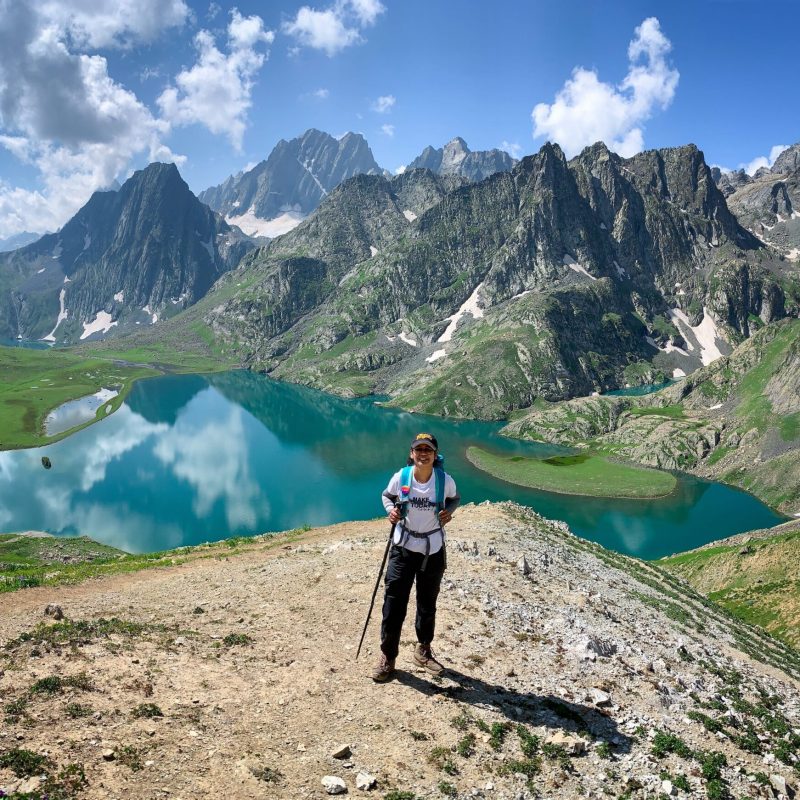
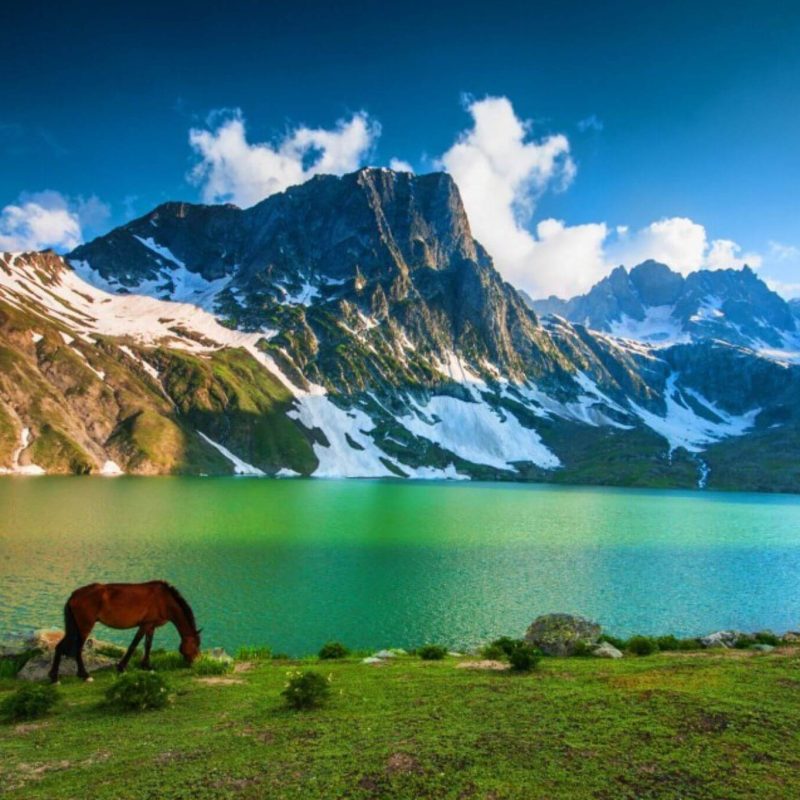
The seven lakes — Vishansar, Krishansar, Yamsar, Gadsar, Satsar, Nundkol and Gangabal — each have a different personality. If you are sitting in Ludhiana, Chandigarh, Amritsar or Delhi right now, this trek is closer and more achievable than you think. This guide will get you there.
Trek at a Glance
Why KGL is Different from Every Other Trek in India
Most treks in India follow a formula — climb for 3 days, reach a summit or lake, come back the same way. The Kashmir Great Lakes Trek does not follow any formula. Every single day you cross into a completely different world. This is the only trek in India that combines all five of these in one continuous journey:
- 3 high-altitude passes above 13,000 ft — Nichnai, Gadsar, Zaj
- 7 glacial alpine lakes, each distinct in colour, size and character
- 5 river valley crossings through remote Himalayan terrain
- A trail walked by Gujjar-Bakarwal nomadic shepherds for centuries
- Direct views of Mount Harmukh (16,870 ft) from the Gangabal basin
Best Time to Do the Kashmir Great Lakes Trek
For Punjabi trekkers, target August 5–20 — stable weather, blooming meadows, manageable crowds. Based on eight years of leading groups from North India.
Snow cleared. Wildflowers at peak. Lakes most vivid. Book by March — July batches fill first.
Stable weather. Still blooming. School holidays. Best for first-timers from North India.
Snow on Nichnai and Gadsar passes. Needs microspikes and snow experience.
Dramatic clear skies but -8°C nights. Snowfall can close passes after 20 September.
How to Reach Sonamarg from North India
Most trekking websites assume you are flying from Mumbai or Bengaluru. If you are in Punjab or Delhi, your options are very different and often much cheaper. Tap any route to expand it.
- Overnight train from Ludhiana / Chandigarh to Jammu Tawi Station
- Shared or private cab Jammu → Srinagar via NH44 — 290 km, 7–8 hours
- One night in Srinagar for acclimatisation and rest
- Morning cab Srinagar → Sonamarg — 83 km, 3–4 hours
Approx cost: ₹2,700 – 4,600 per person
- Direct flight from Amritsar (SGRJ Airport) to Srinagar — approx 1 hour
- Book 6–8 weeks ahead for fares from ₹2,500 one way
- Cab from Srinagar Airport to Sonamarg: 3–4 hours
Approx cost: ₹4,500 – 8,000 per person
- Fly Delhi → Srinagar — 1 hr 20 min, from ₹2,800 one way if booked early
- Or Delhi–Jammu overnight Rajdhani / Jammu Mail + cab to Srinagar as Route 1
Flight option: ₹2,800 – 5,000 per person
1. Spend at least one night in Srinagar before heading to the mountains. The altitude jump from Ludhiana (244 m) to Sonamarg (2,690 m) is real — your body needs this transition.
2. No ATMs after Sonamarg. Carry ₹5,000–8,000 cash from Srinagar before departure.
Altitude Profile — Day by Day
Camp / Lake
Day-wise Itinerary — Kashmir Great Lakes Trek 2026
Each day is collapsible — tap to read the full description. Day 1 is open by default.
1
The drive from Srinagar to Sonamarg along the Sindh River is a trek in itself. The highway cuts through gorges, past glacial streams and pine-covered ridges. By the time you reach Sonamarg, the mountains are already enormous.
Spend this day doing nothing strenuous. Walk around the market, pick up last-minute supplies — dry fruits, energy bars, an extra pair of socks. Eat a proper meal. Drink three litres of water. Sleep by 9 PM. The trek starts tomorrow.
2
The trail begins by descending to the Sindh River, crossing it on a wooden bridge, then climbing steeply through maple and pine forest. About 40 minutes in, the trees open into a rolling meadow overlooking the entire Sonamarg valley. Behind you is the last view of civilisation you will see for a week.
The day ends at Nichnai — a wide, gently sloping meadow surrounded on three sides by rock peaks. The night sky here will likely be the best stargazing of your life.
Watch out for: This day feels longer than the distance suggests. Start by 7:30 AM.
3
The morning climb to Nichnai Pass is the first real test — a steady 2-hour ascent on a well-marked trail. At the pass, both sides of the Himalayas open simultaneously. Valley behind you. New valley ahead. Snow peaks in every direction. Most trekkers stand here longer than they planned.
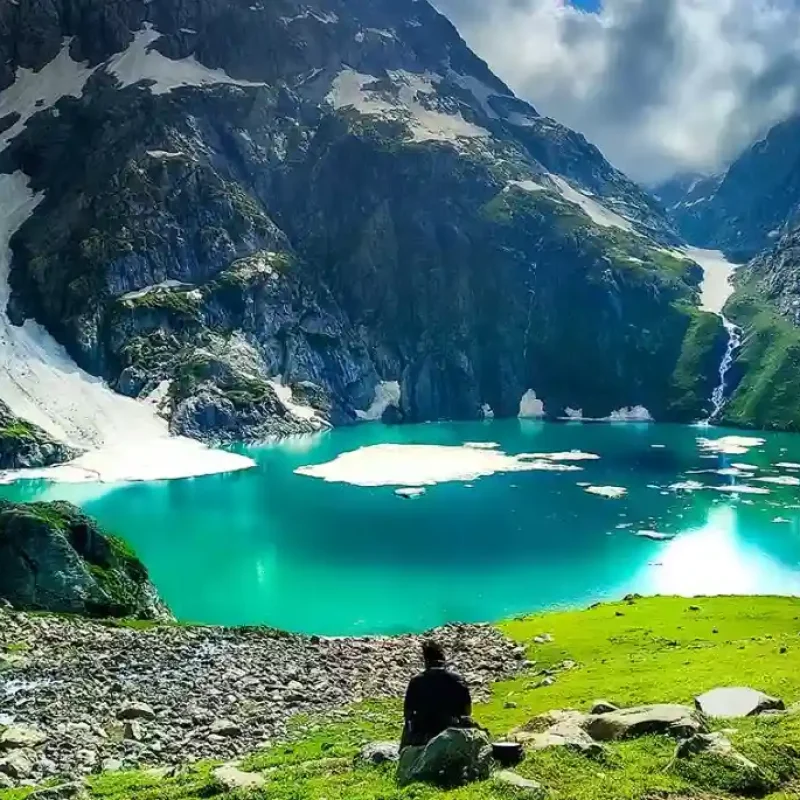
Then — without warning — Vishansar Lake appears below. Sapphire blue. Perfectly still. Ringed by snow mountains. Its twin, Krishansar Lake, sits 15 minutes further along the ridge.
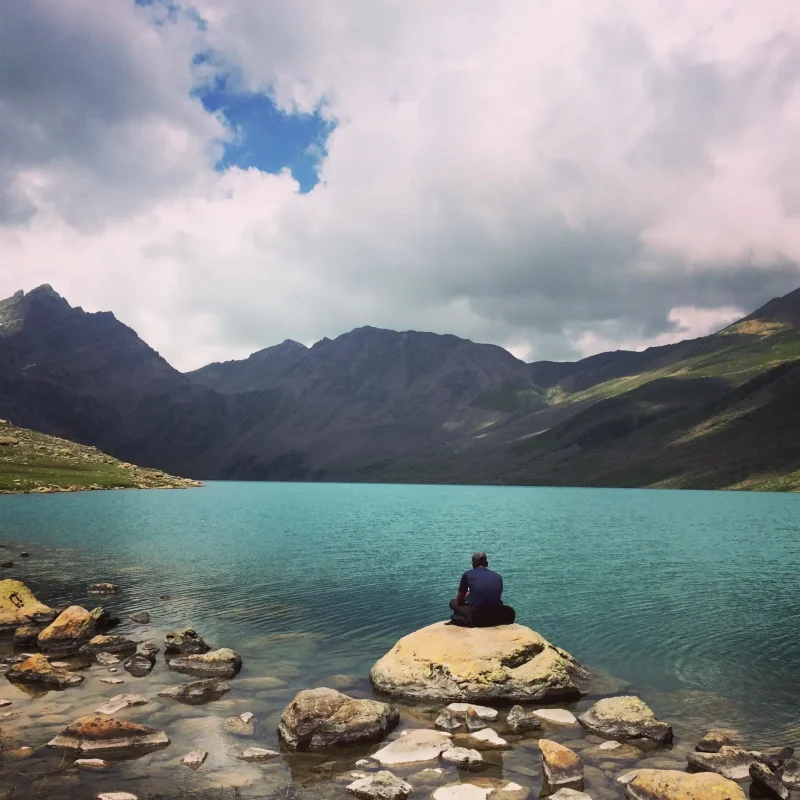
Golden hour tip: Walk to the lakeside at 6–7 PM. Put your camera down at some point and just sit there.
4
The hardest day. And the most spectacular. Start at 6 AM — no exceptions. The climb to Gadsar Pass takes 3–4 hours. On a clear day, you can see four lakes from the pass simultaneously.
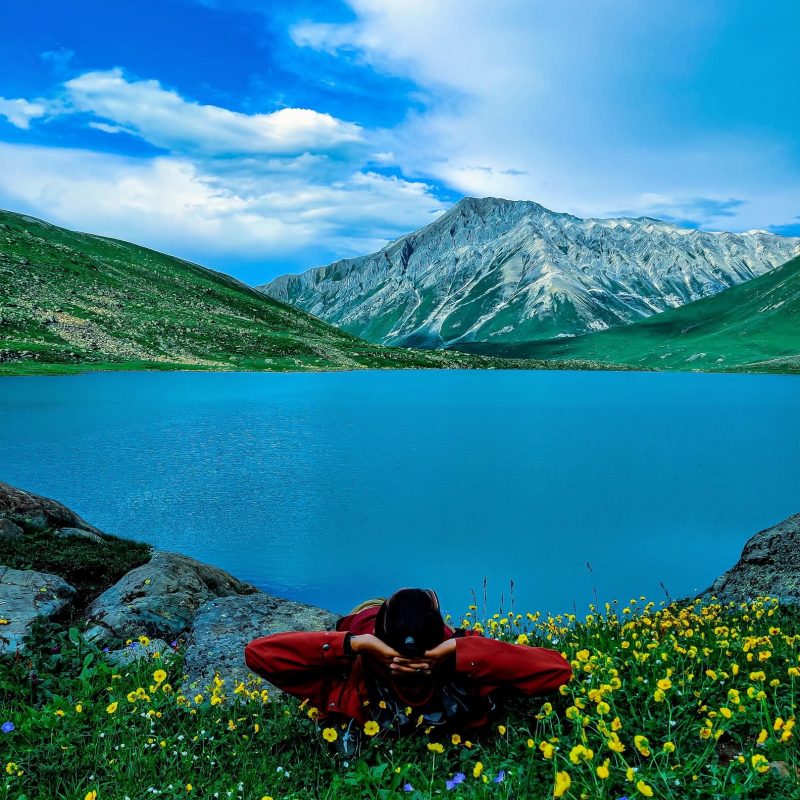
The descent into Gadsar Valley is carpeted in wildflowers — blue Himalayan poppies, yellow ragwort, purple asters. Gadsar Lake sits at the bottom, fed by a glacier, surrounded by meadows so green they look artificially lit.
Watch out for: Carry extra water, high-calorie snacks and your warmest layer in your daypack. Do not underestimate this day.
5
A recovery day by KGL standards — rolling meadow terrain with gentle ups and downs. The Satsar cluster is a series of small lakes strung through a wide valley, each one different in colour and character.
This is the section where you are most likely to encounter Gujjar-Bakarwal shepherd camps. Stop if you can. They will almost always offer chai or fresh milk. Camp at Satsar. Quietest night of the trek.
6
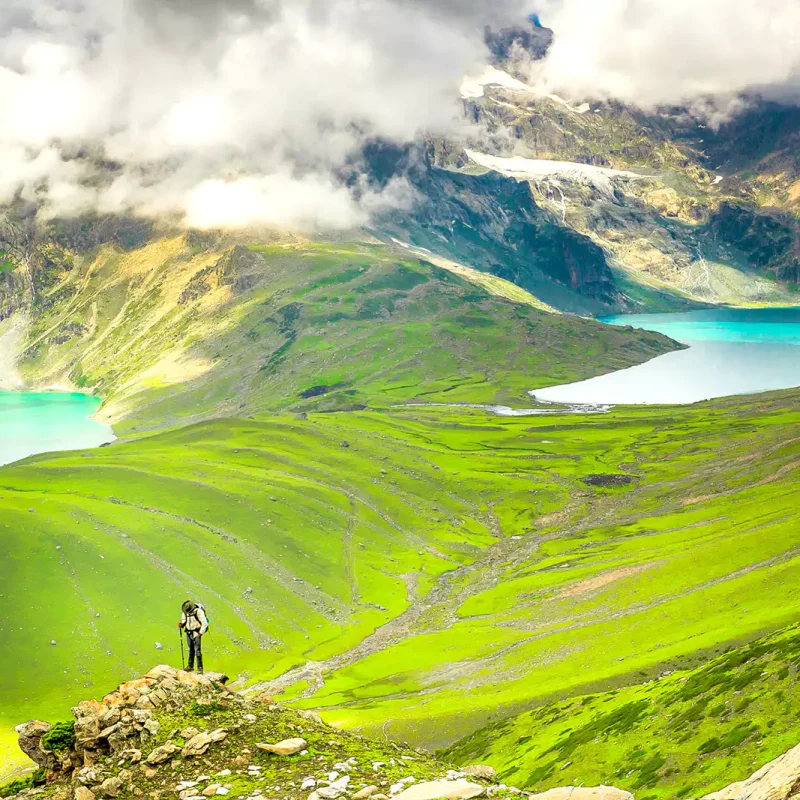
The final pass of the trek, and the most cinematic descent. As you cross Zaj Pass, Gangabal and Nundkol Lakes appear below — twin lakes in a sweeping basin, with Mount Harmukh (16,870 ft) rising behind them like a curtain being pulled back. This is the most photographed moment on the entire KGL trek.
Camp between the two lakes. Set a 3 AM alarm for the Milky Way directly above Gangabal. It is worth losing two hours of sleep.
7
The final descent through dense pine and fir forests to Naranag village. Your legs are tired. Your pack feels heavier than on Day 1. And yet almost every trekker at this point is quiet — not from exhaustion, but from not quite being ready for it to end.
Naranag greets you with ancient 8th-century Hindu temple ruins. Drive to Srinagar: 50 km, 2 hours. Hot meal. Hot shower. Call your family.
Difficulty & Fitness Preparation
Official rating: Moderate to Difficult. Honest version: If you can walk 15 km on flat ground without stopping, you have the base fitness. The KGL trek will push you beyond that every single day.
- Daily walking: 11–14 km with 800–1,200 m altitude gain and loss
- Three passes above 13,000 ft — each requiring 2–4 hours of sustained uphill
- No exit points from Day 3 to Day 6 — if you start, you commit to finishing
- Cold nights (0°C to -8°C at high camps) affect sleep and energy levels
| Week | Training Activity |
|---|---|
| Week 1–2 | 5 km daily walk/jog, stair climbing 20 minutes daily |
| Week 3–4 | 8 km walk with 5 kg daypack, weekend 15 km hike |
| Week 5–6 | 10 km jog/walk, add bodyweight squats and lunges |
| Week 7–8 | Full day hike with 8–10 kg pack on uneven terrain |
You have never done any Himalayan trek · You have a history of high-altitude sickness without medical advice · Your daily physical activity is near zero — 8 weeks is not enough to start from scratch
Real Cost Breakdown — No Hidden Surprises
| Cost Head | Budget | Mid-Range |
|---|---|---|
| Train from Ludhiana to Jammu | ₹400–700 | ₹900–1,500 (AC) |
| Cab Jammu to Srinagar | ₹600–900 (shared) | ₹3,500–5,000 (private) |
| OR Flight Amritsar–Srinagar | — | ₹2,500–5,000 |
| Srinagar hotel (1–2 nights) | ₹800–1,200/night | ₹2,000–4,000/night |
| Trek package (guide, tent, meals) | ₹12,000–16,000 | ₹18,000–28,000 |
| Forest/trek permit | ₹500–700 | ₹500–700 |
| Gear rental (boots, poles, bag) | ₹1,500–2,500 | — |
| Return cab Naranag–Srinagar | ₹1,000–1,500 | ₹1,000–1,500 |
| Miscellaneous (snacks, tips) | ₹2,000–3,000 | ₹3,000–5,000 |
| Total per person | ₹18,000–26,000 | ₹30,000–46,000 |
Guide, tent, sleeping bag, all meals on trail, trek permits, first-aid support. Does NOT include travel to/from Srinagar, personal gear, tips, or emergency evacuation insurance.
Permits for Kashmir Great Lakes Trek 2026
Book through a registered operator — they handle permits as part of the package. Solo trekkers arranging independently can face delays at the Sonamarg Forest Office in peak season.
Packing List — With Honest Reasons Why
Every item listed has a specific reason. Nothing is filler. Expand each category.
- ✓Thermal base layers (top + bottom) × 2 sets — Nights at Gangabal drop to -8°C. Without thermals you will not sleep.
- ✓Fleece or down jacket — Fleece for evenings, down for sleeping. Both are needed.
- ✓Waterproof rain jacket — Kashmir rain arrives without warning. Keep in daypack, not buried in main bag.
- ✓Trekking pants × 2 (quick-dry) — Cotton jeans at altitude in wet cold is dangerous, not just uncomfortable.
- ✓Warm gloves + woollen cap — At Gadsar Pass, the wind will remind you why these exist.
- ✓UV-protection sunglasses (wraparound) — Glacier glare causes snow blindness. Buy proper UV-rated, not fashion ones.
- ✓Ankle-high trekking boots — broken in for 4–5 hikes before Day 1 — New boots are the #1 source of blisters on KGL. Non-negotiable.
- ✓Trekking socks × 4–5 pairs (wool blend) — Your feet will thank you more than any other single decision.
- ✓Camp slippers — After 7 hours on a trail, your feet need to breathe at camp.
- ✓Trekking poles × 2 — Your knees will file a formal complaint on the Gadsar descent without these.
- ✓Backpack 50–60 litres with rain cover
- ✓Sleeping bag rated to -10°C — Do not trust the operator’s ‘it’s fine’ without checking the actual rating.
- ✓Headlamp + spare batteries — 3 AM Milky Way alarm requires a headlamp.
- ✓Water bottles × 2 (at least 2 litres total capacity)
- ✓Diamox (Acetazolamide) — Consult your doctor before carrying. Helps with altitude acclimatisation significantly.
- ✓ORS packets × 10–12 — Electrolyte replacement is critical at altitude. One sachet per day minimum.
- ✓Ibuprofen + Paracetamol — For headaches, muscle pain and fever.
- ✓Bandages, antiseptic cream, blister plasters — One blister treated early stays a blister. One ignored ends a trek.
- ✓Sunscreen SPF 50+ — UV radiation at 13,000 ft is far higher than at sea level. Reapply every 2 hours.
- ✓Water purification tablets or Lifestraw — Never drink unfiltered stream water. Ever.
KGL vs Tarsar Marsar Trek — Which One to Choose?
| Factor | Kashmir Great Lakes | Tarsar Marsar |
|---|---|---|
| Duration | 7–8 days | 4–5 days |
| Difficulty | Moderate–Difficult | Easy–Moderate |
| Max Altitude | 13,800 ft | 12,000 ft |
| Lakes | 7 lakes | 2 main lakes |
| Best for | Experienced trekkers | First-time Himalayan trekkers |
| Route type | Point to point | Loop |
If you have done Triund or Kedarkantha and want to go bigger — KGL. If this is your first Kashmir trek and you want to test yourself before committing to 8 days — Tarsar Marsar first, KGL next year.
Common Mistakes First-Time KGL Trekkers Make
What Happens If the Weather Turns Bad
Low Risk
Moderate Risk
High Risk
Critical
Emergency & Safety Protocol
Save these numbers before leaving Srinagar. No mobile network after Day 2.
📞 J&K Tourism Emergency — 0194-245-2690
📞 Sonamarg Tourist Office — 01922-246240
📞 District Hospital Ganderbal — 0194-246-0434
💬 Trekking Cougars — Javed (WhatsApp) — 8198838368
Every group we lead carries a pulse oximeter, satellite communicator and a trained first-responder guide. We check oxygen saturation at every camp above 12,000 ft. This is non-negotiable.
Frequently Asked Questions
+
+
+
+
+
+
+
+
Ready to Book Your Kashmir Great Lakes Trek?
The Kashmir Great Lakes Trek is the kind of week that rewires you quietly. You come back speaking less but meaning more. The ordinary irritations of daily life — traffic on the Ludhiana bypass, the noise of the office — seem smaller somehow. The mountains have a way of doing that.
We at Trekking Cougars have been leading trekkers from India and abroad to these lakes since 2017. We know which campsite has the best Gangabal sunrise angle. We know which Gujjar family makes the best chai on the Satsar section.